
Menu
樂古齋
Rakkojae Andong
Giwa Main Complex
Andong, Gyeongbuk · Hahoe Village

RAKKOJAE ANDONG Giwa Main House

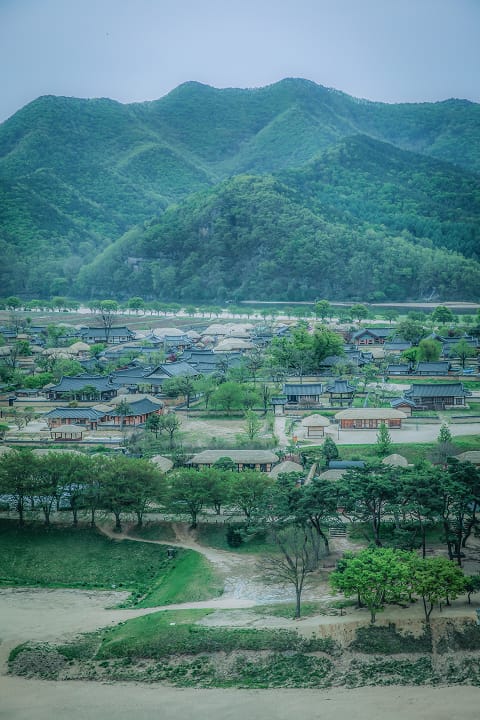
At the entrance to Hahoe Village, another village of twenty-two houses.

Giwa Story

The soul of pungnyu is nature,
and the house for nature is the hanok

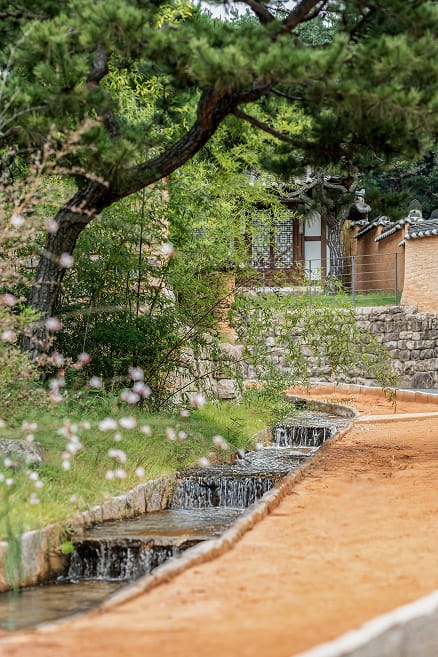
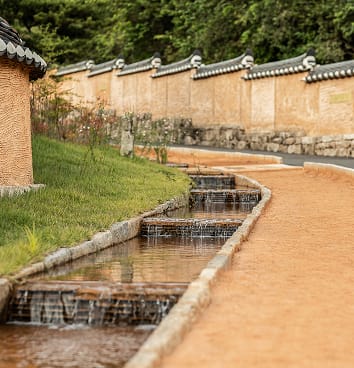
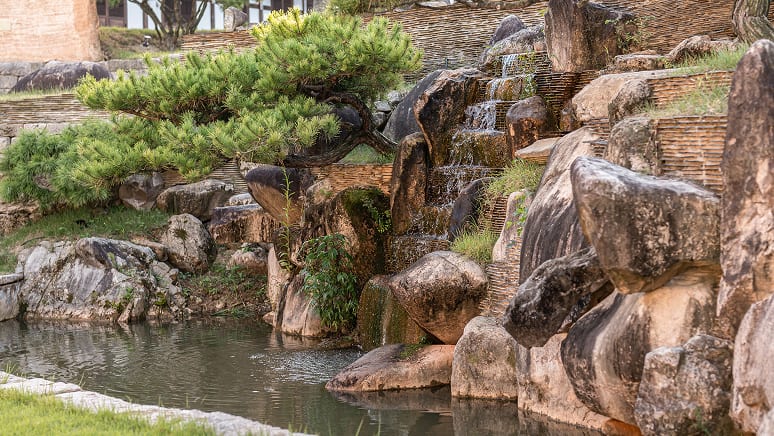
A watercourse modelled on the Nakdong River winds around the hotel.
Among buildings modelled on five pavilions of Changdeokgung Palace lie Silla foundation stones and Goryeo and Joseon stonework.
“The essence of Korean culture is pungnyu — the art of leisure — and the essence of pungnyu is nature.
The hanok is the finest way to savour nature.”
見 · To See 01

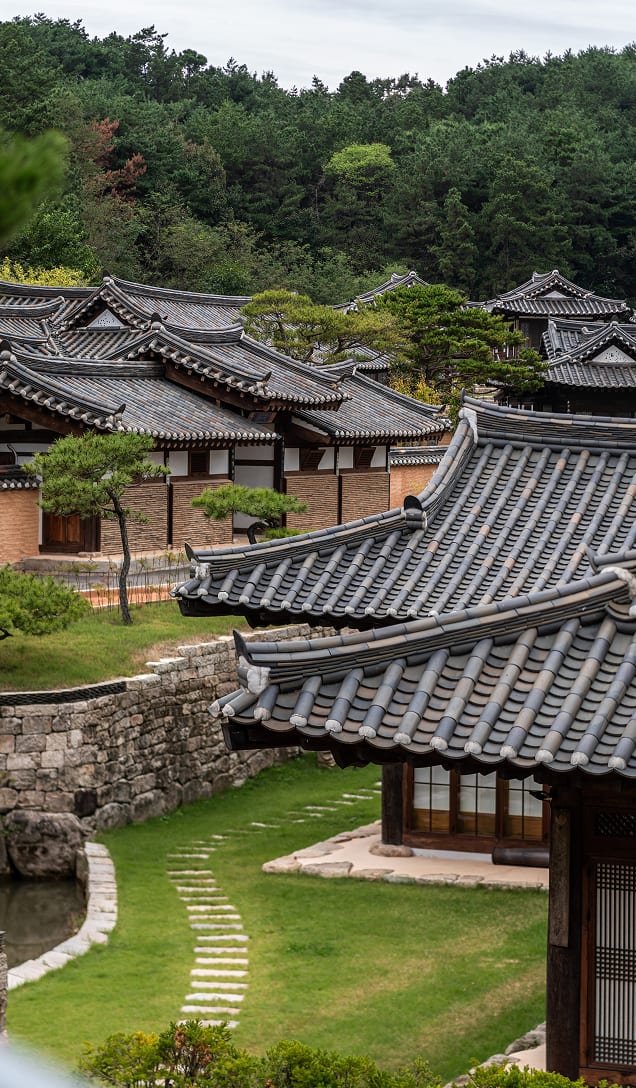
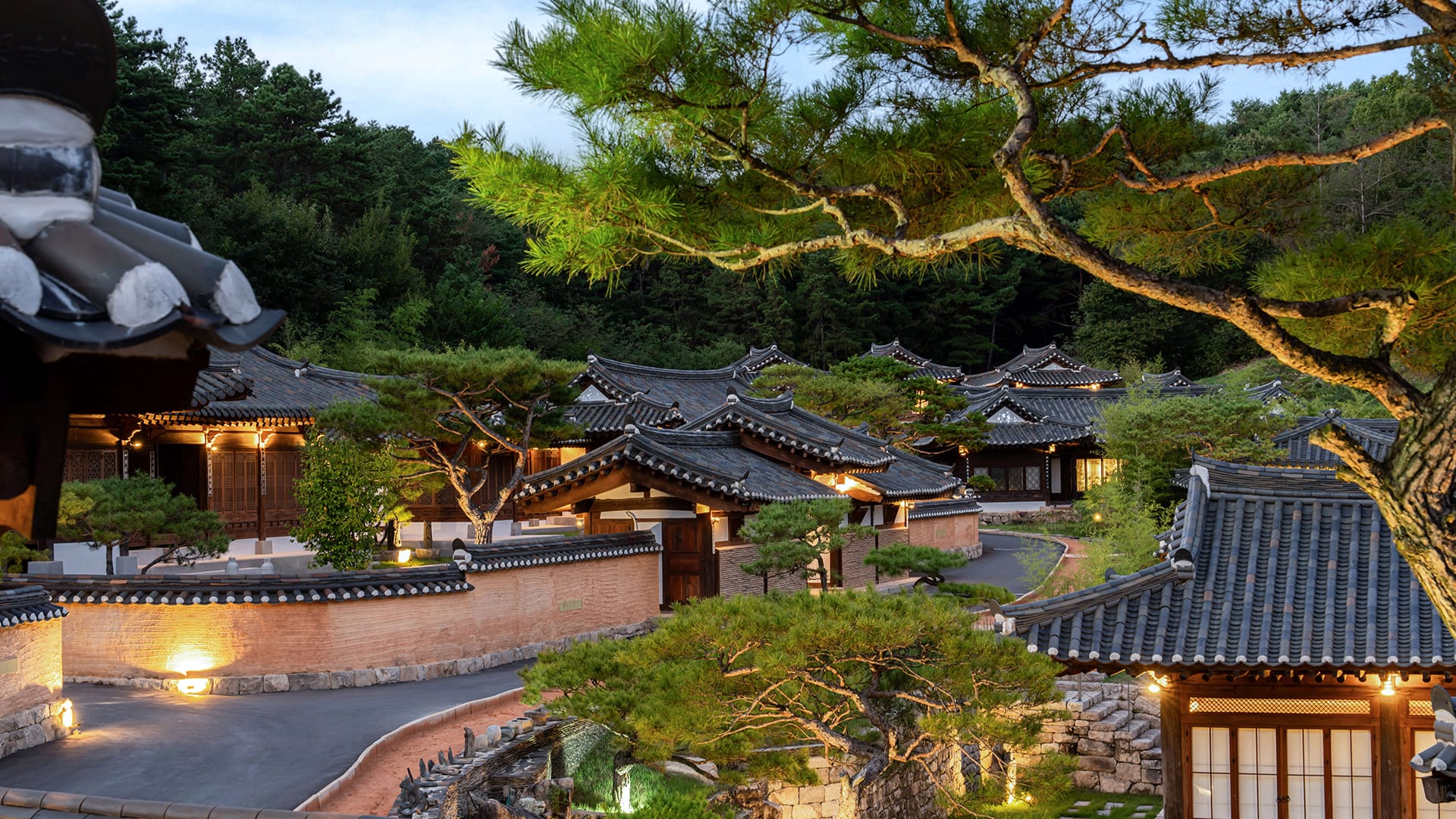
A village in the image of Changdeokgung

Buyongjeong, Gwallamjeong, Aeryeonjeong, Yeongyeongdang and Nakseonjae — modelled on five pavilions of Changdeokgung Palace.
In a village of commoners’ homes, we wanted to show another side of tradition.

The dancheong was painted in deliberately faded pastels,
and the roofs mix in “imperfect” tiles of uneven colour.

So it looks not like a new house, but an old family home.

見 · To See 02

Three ways to
know a fine hanok

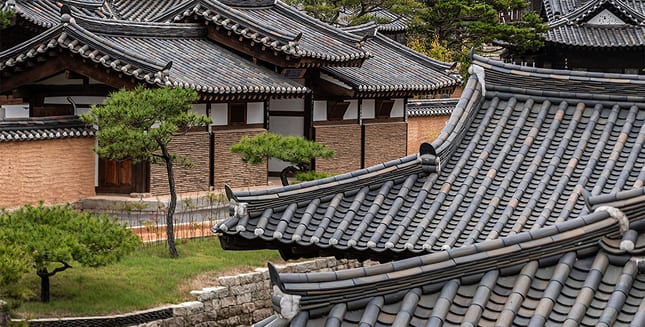
A hanok’s quality lies above and below.

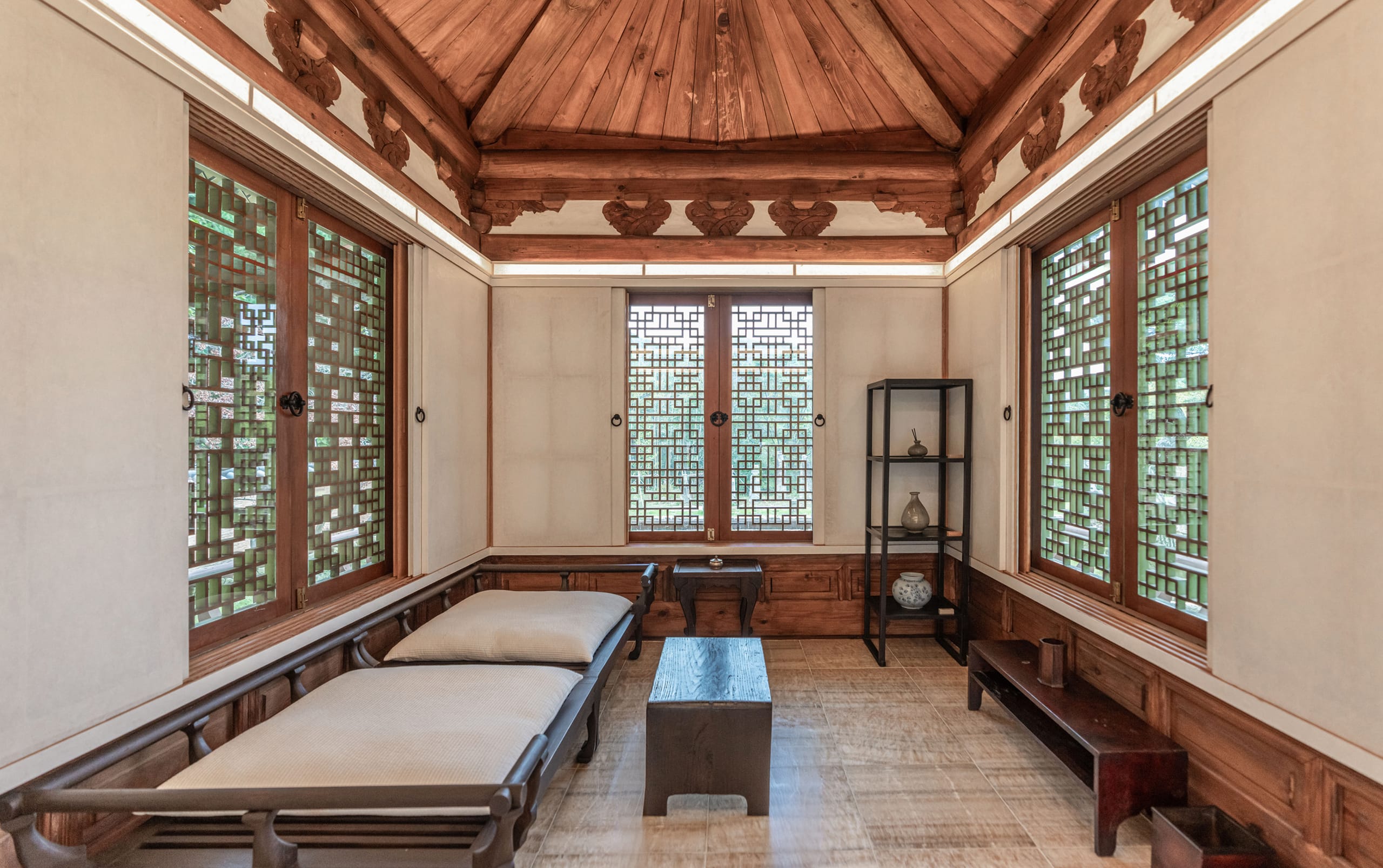
八作Hip-and-gable roof
The most graceful line of any hanok roof.
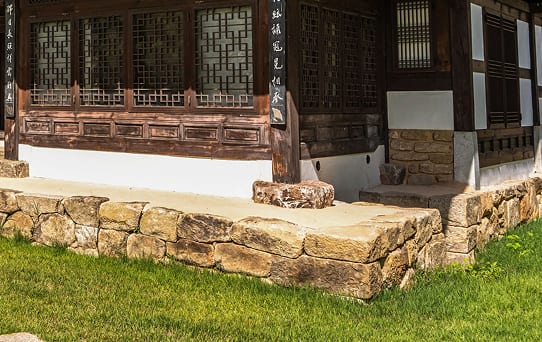
礎石Foundation stones
Mungyeong field stones, chiselled one by one.
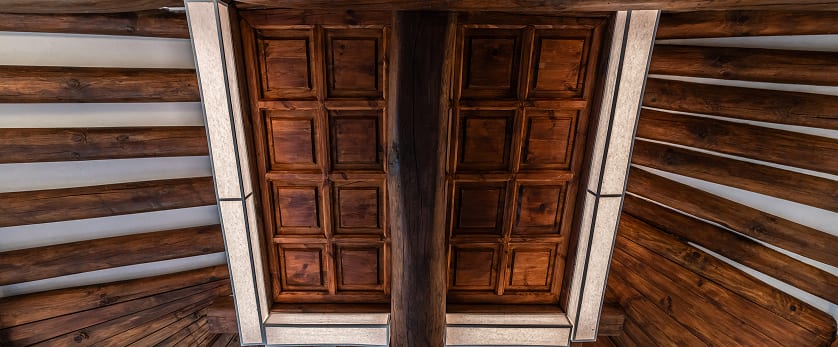
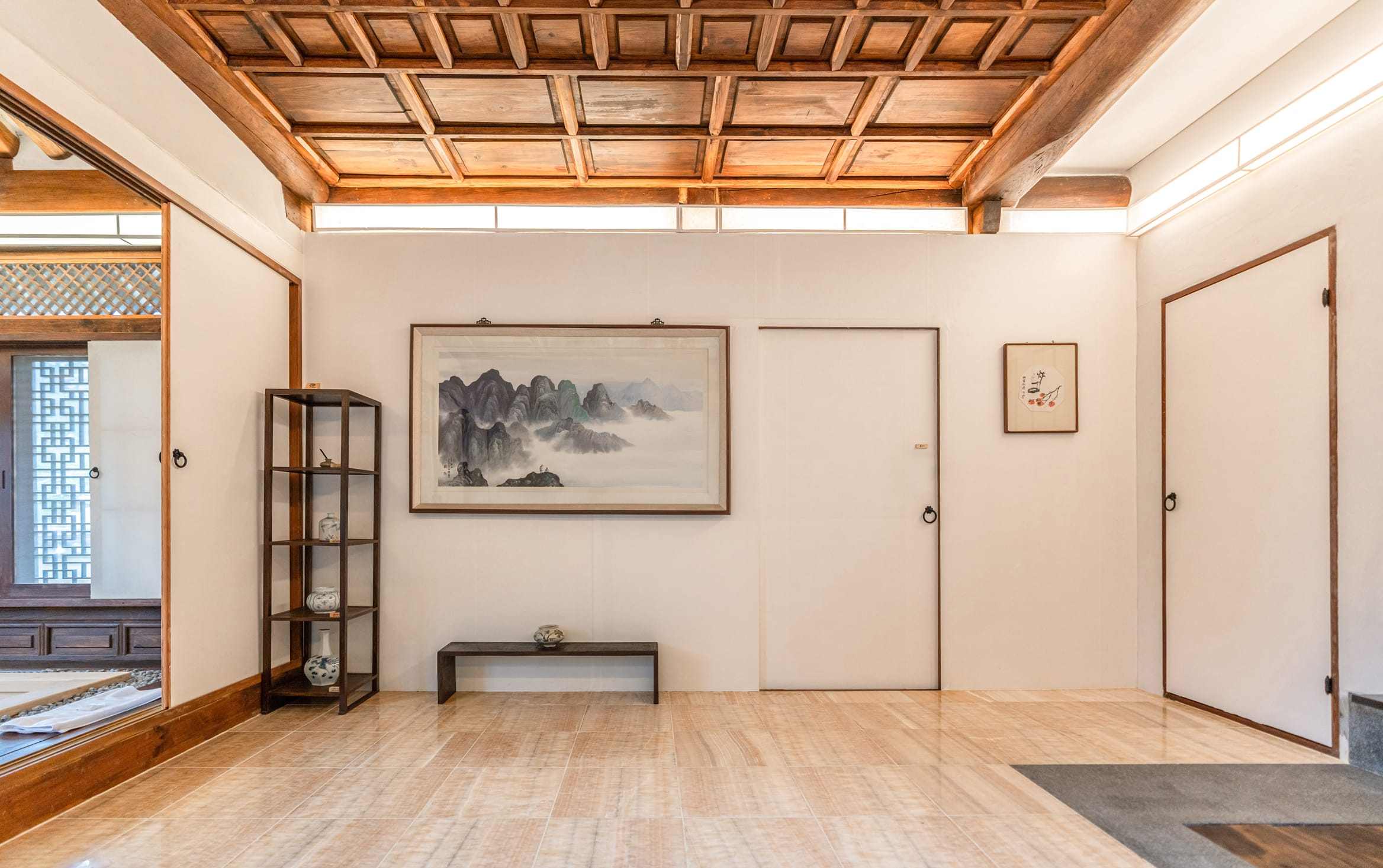
井Coffered ceiling
A palace ceiling, with not a single wire in sight.
見 · To See 03

A monolith for the future of hanok

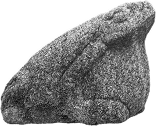
A black stone in the midst of tradition

Inspired by the monolith in 2001: A Space Odyssey.
A single stone holds our resolve that the hanok, too, must evolve.

見 · To See 04

Constellations that glow at night

Stars rise on the rooftops.

Dots carved into the hapgak (合閣), the gable end of the tiled roof, glow in the dark.
One for each house: the twelve signs of the zodiac.

見 · To See 05

Centuries in every room

A night in a museum

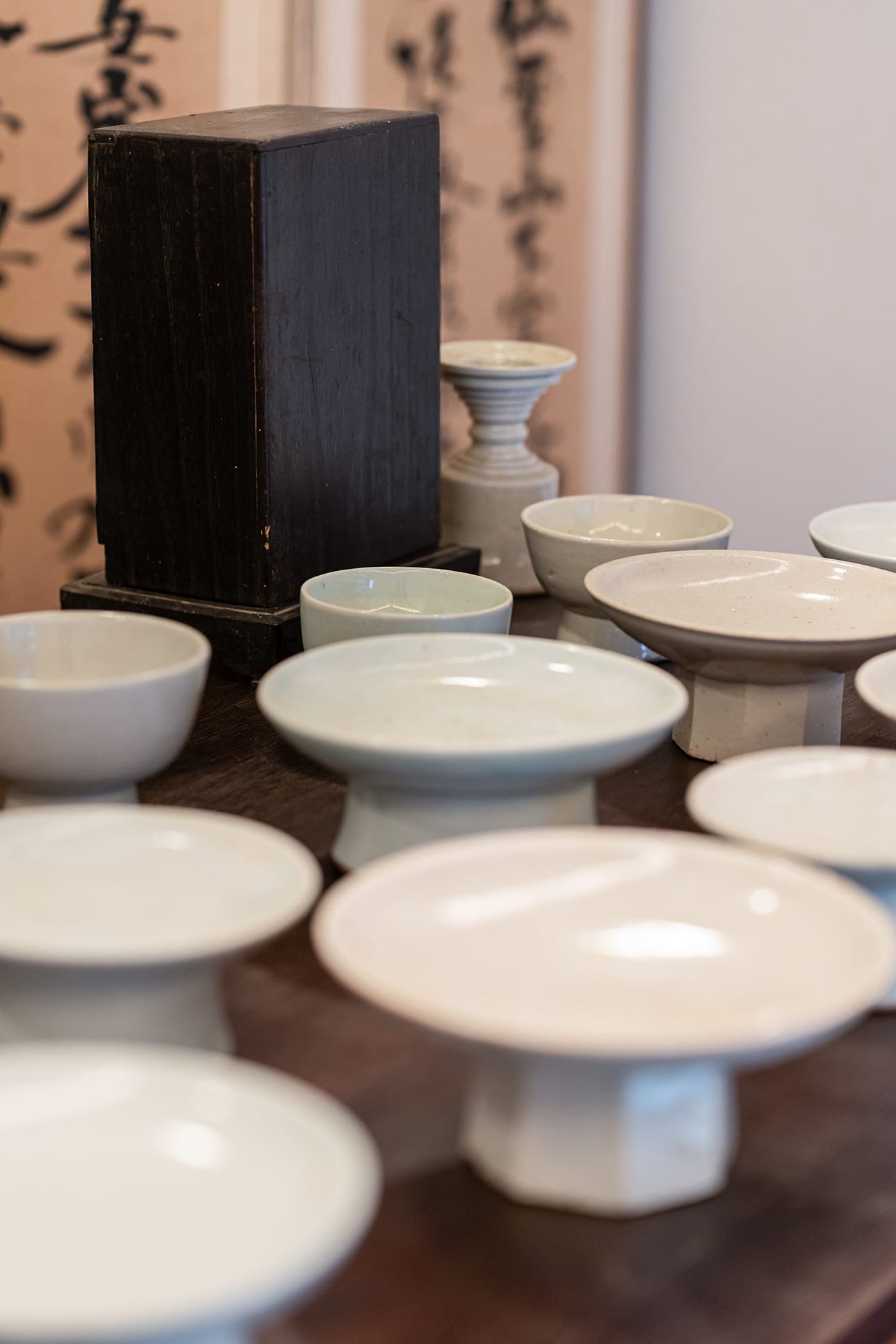
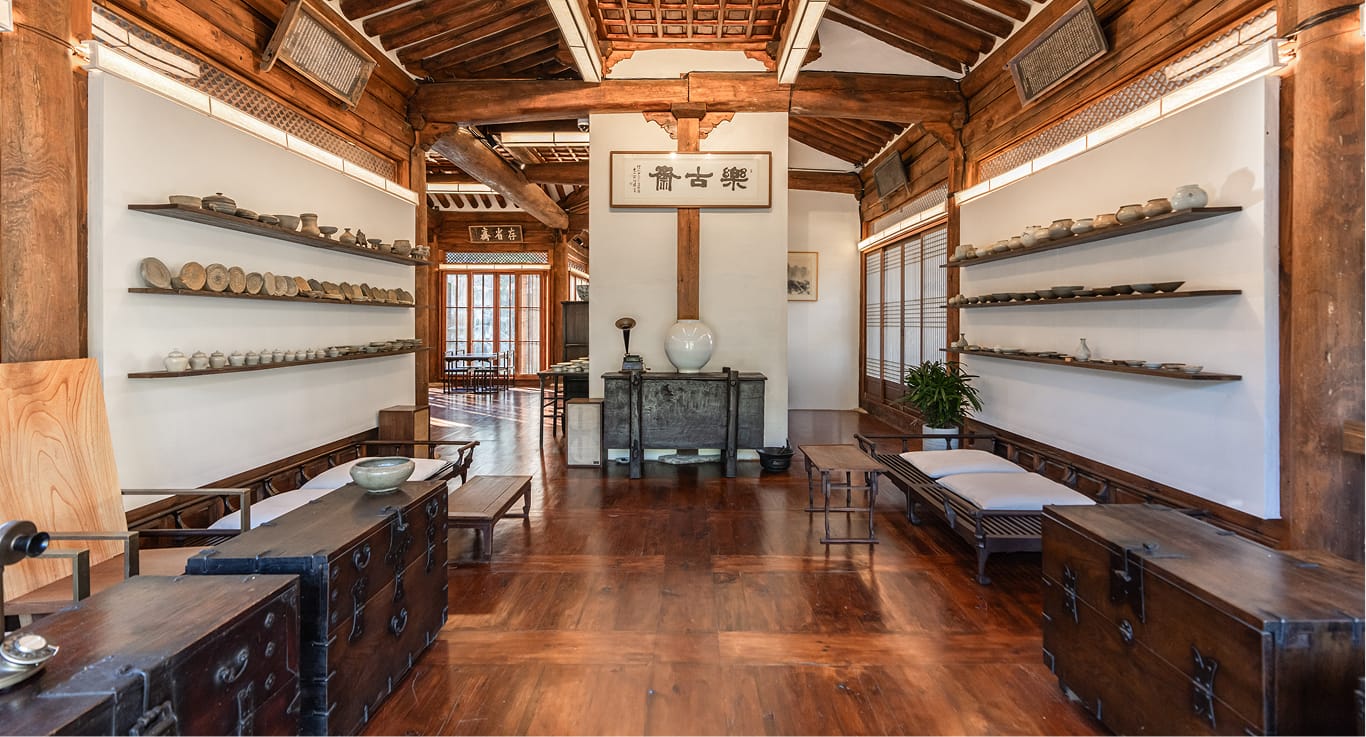
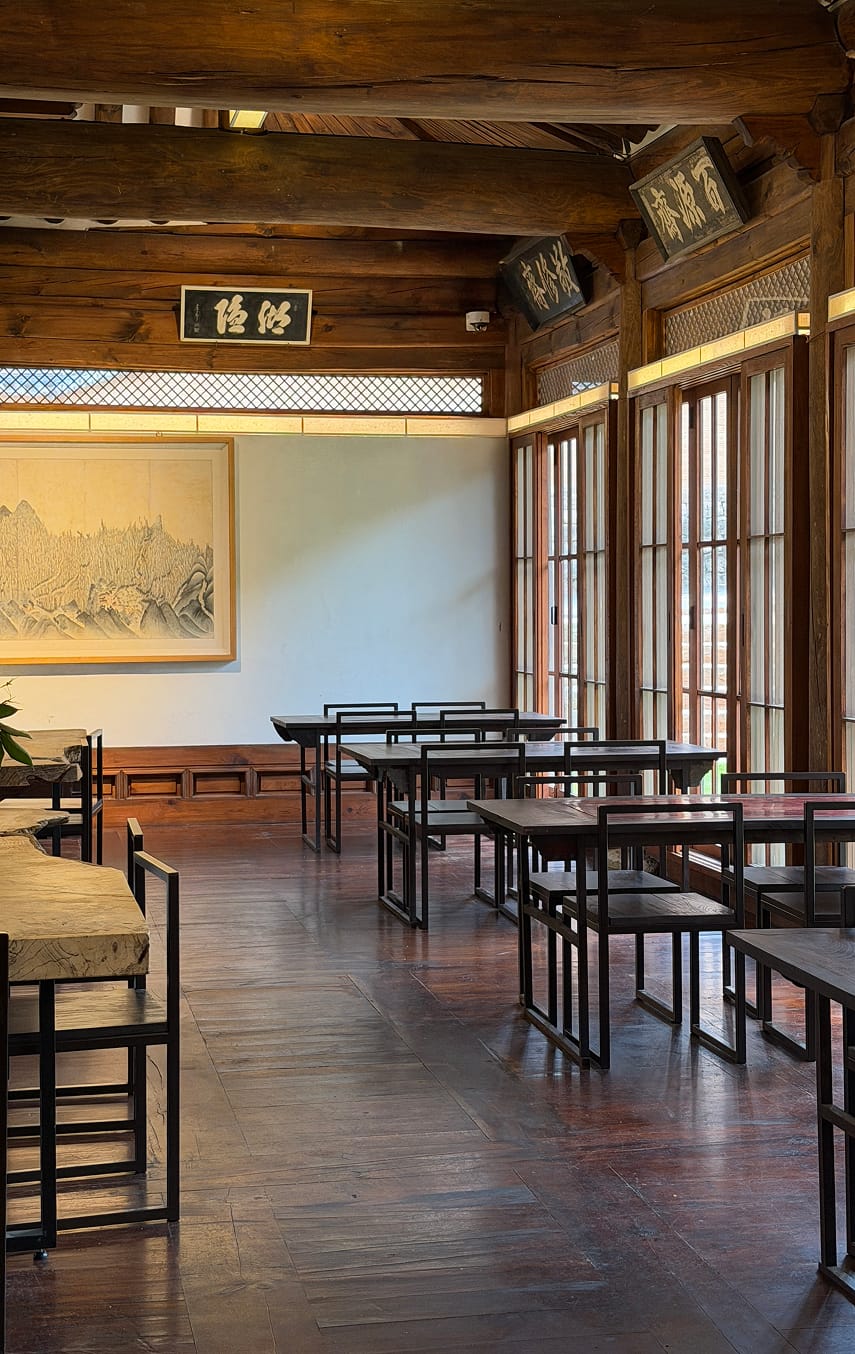
The lobby holds Joseon woodblocks and moon jars, wall-sized calligraphy and the handwriting of the scholar Song Si-yeol (Uam).
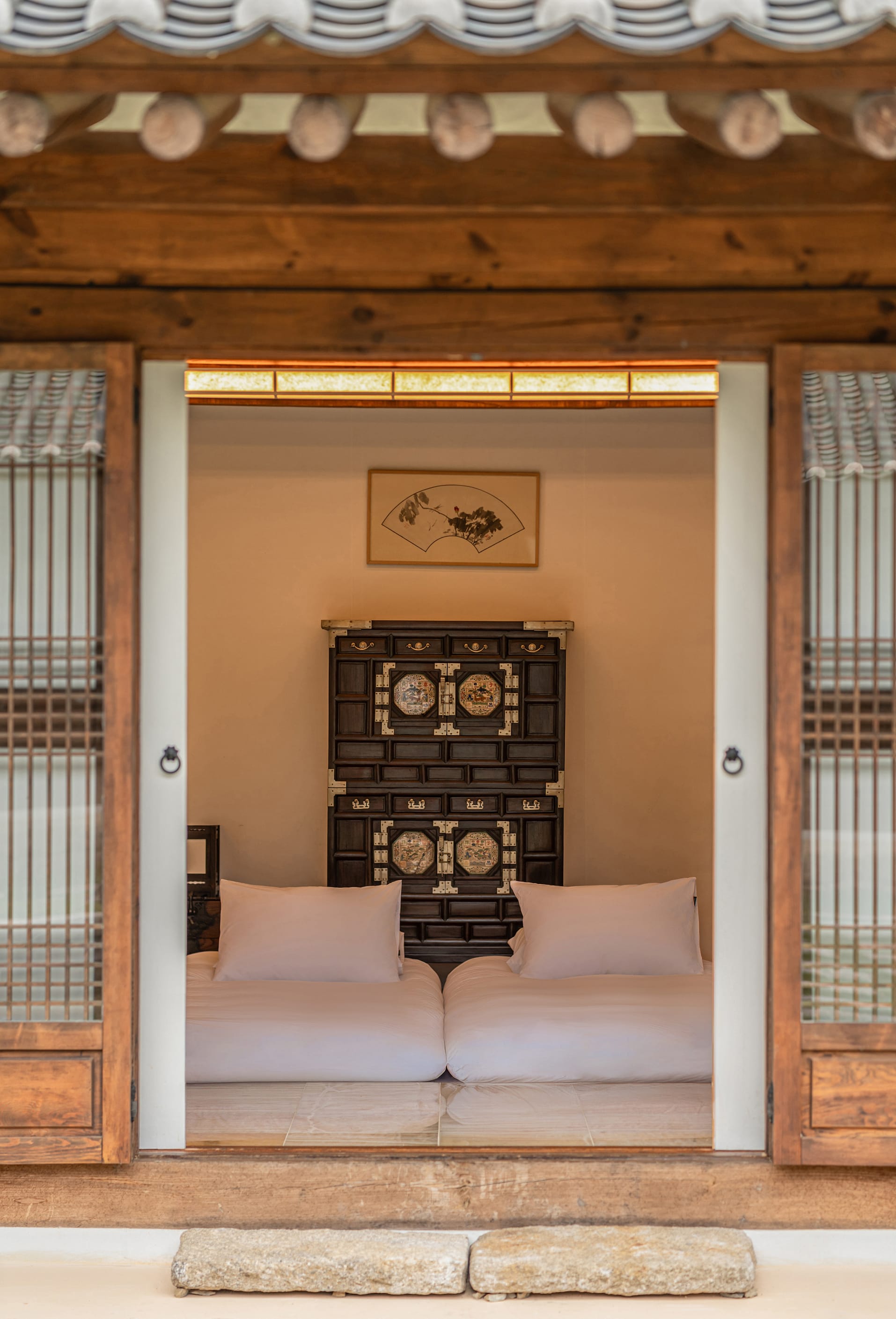
The rooms hold 13th- and 14th-century art and genuine antique furniture gathered from across Korea;
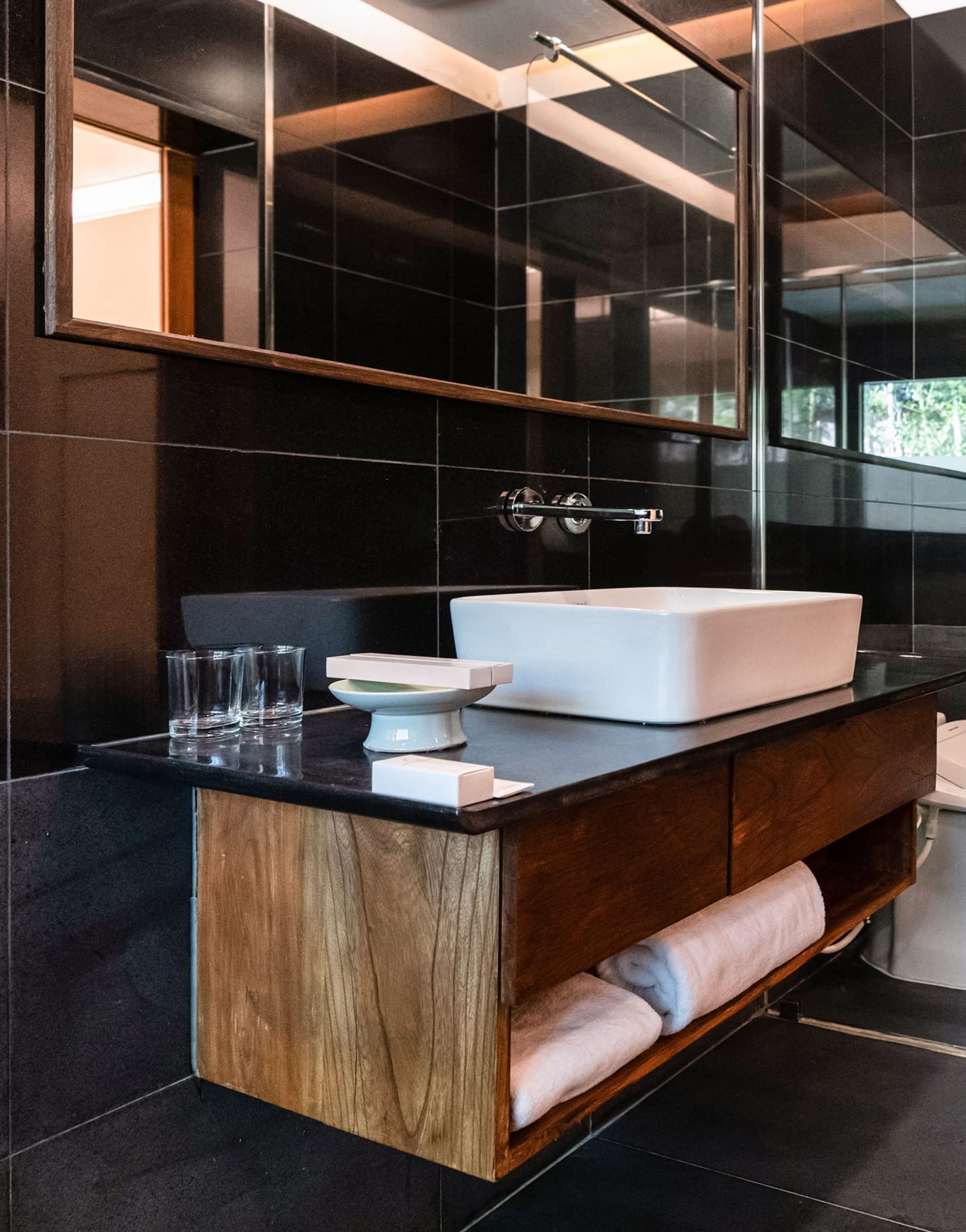
a 17th-century porcelain vessel serves as a diffuser, a 19th-century ritual dish as a bathroom soap dish.

17th-century porcelain diffuser “A 400-year-old vessel for scent”

19th-century ritual dish soap holder “Once set on the ancestral altar”

Silla foundation stones · Goryeo and Joseon stonework “A thousand years guarding the courtyard”

Calligraphy by King Yeongjo “A room hung with a king’s hand” Buyongjeong — for Buyongjeong guests only

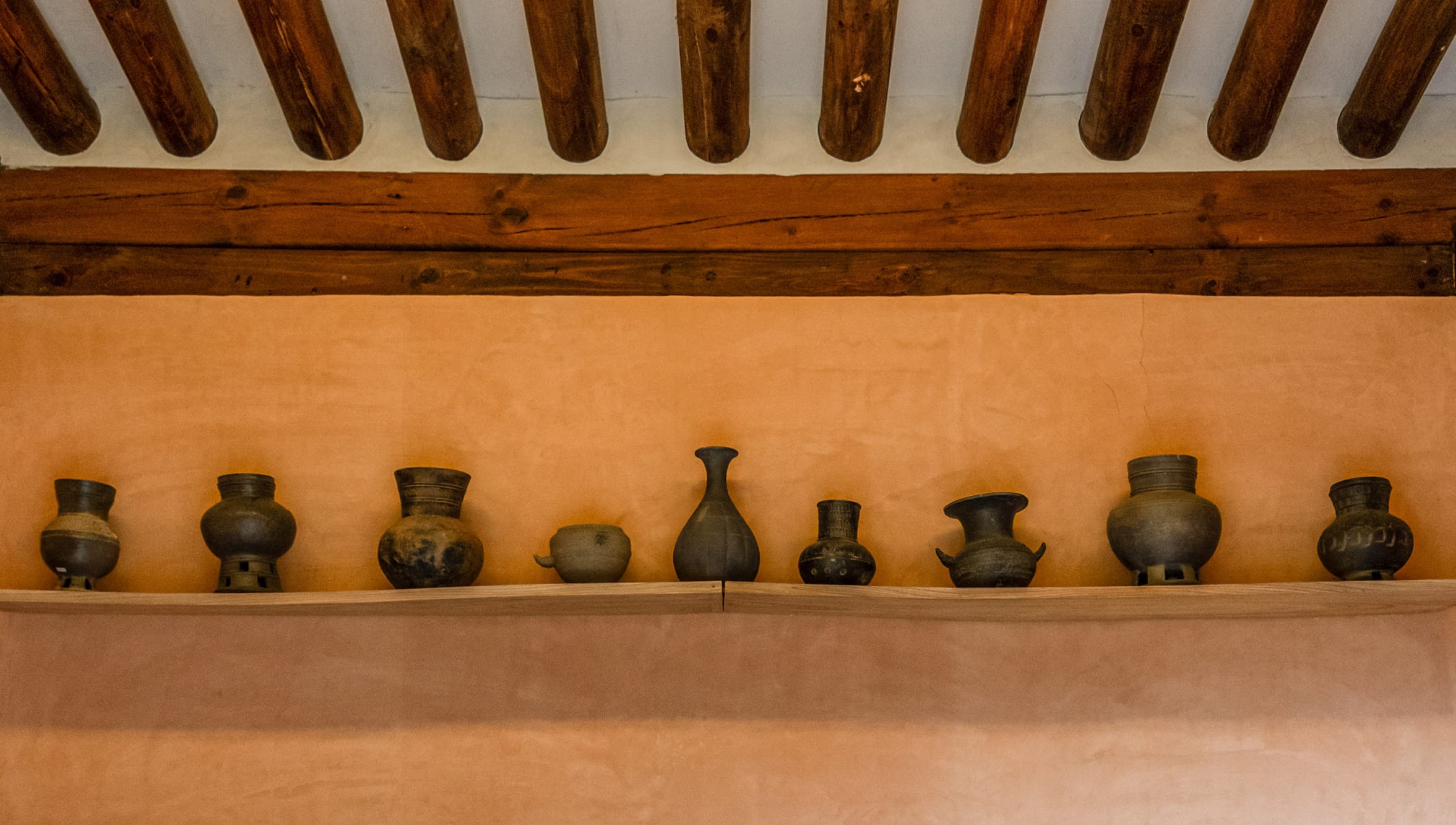
Gaya pottery “Vessels from 1,500 years ago” Sauna

Calligraphy by Song Si-yeol “A scholar’s hand in the lobby”

Antique room furniture (side tables · bandaji chests) “Genuine antiques gathered from across Korea”

Jeonju Yi clan virtue gate · three viewing stones of King Sunjo’s children Nakseonjae Suite

These antiques have endured for centuries. Please admire them with your eyes only.

見 · To See 06

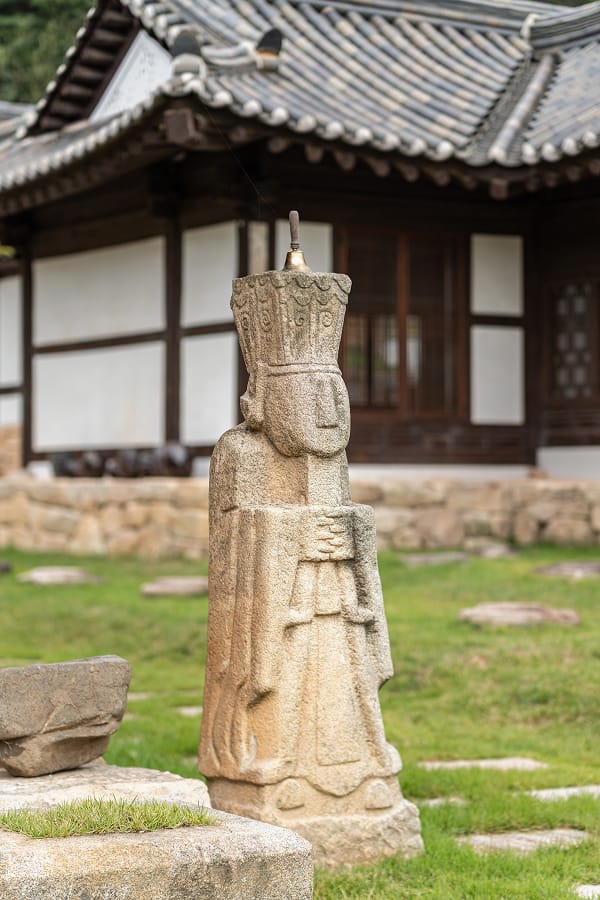
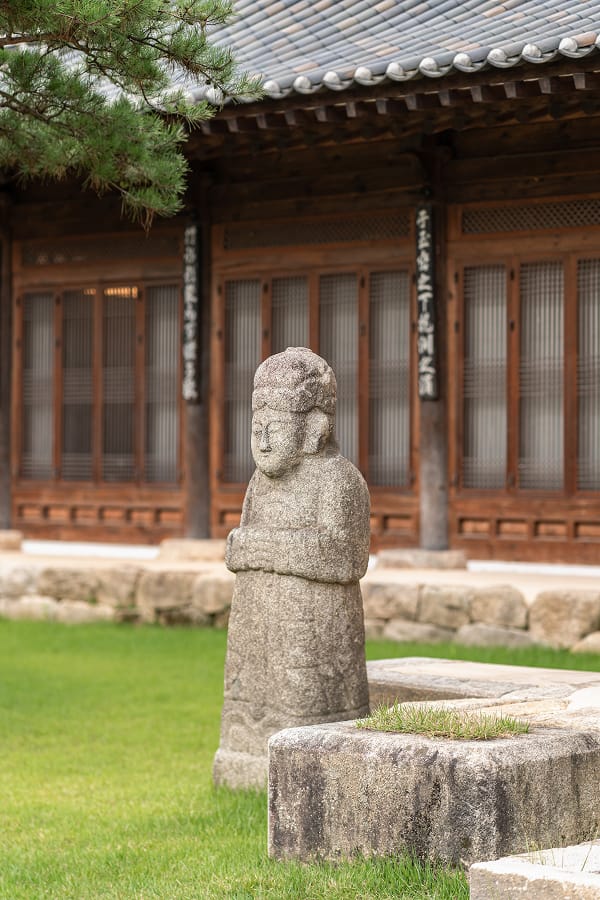
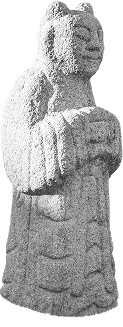
Stone guardians (石人) of the courtyard

Civil and military officials in stone

Stone figures once stood before royal tombs and noble graves to guard their masters —
civil officials in court robes, military officials in armour with swords.
Twenty-four Joseon civil figures stand at the lobby entrance and by the pond,
and two military figures at the lobby and Aeryeonjeong entrances, greeting our guests.

No two share the same face or height. On your walk, see if you can tell civil from military.

休 · To Rest 01

Shoes off,
feet on the earth

Walk barefoot along the red-clay path, about 320m round trip, that links the hanok.
In summer, rest your feet in the footbath at the end of the path.

休 · To Rest 02

Easing the journey away
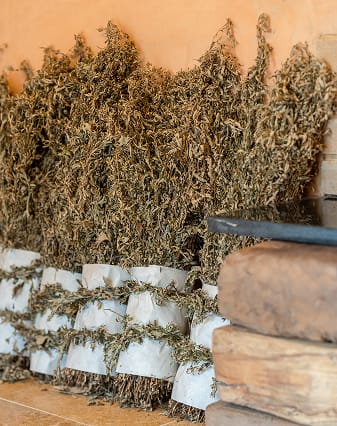
in the scent of mugwort

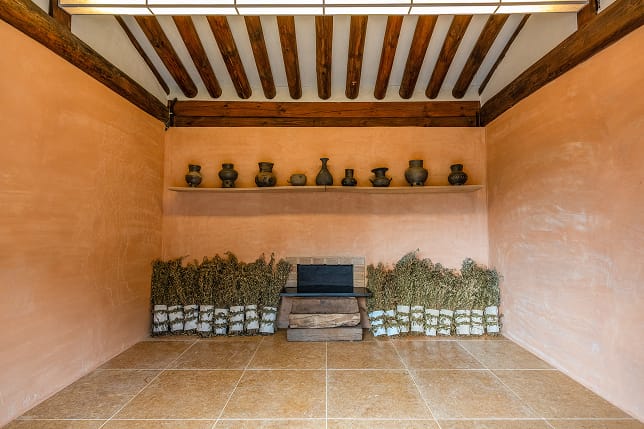
A traditional Korean sauna (jjimjilbang) filled with the scent of mugwort
slowly warms a body tired from walking.
The sauna is free after check-in, first come first served; the footbath opens in summer.

樂 · To Enjoy 01

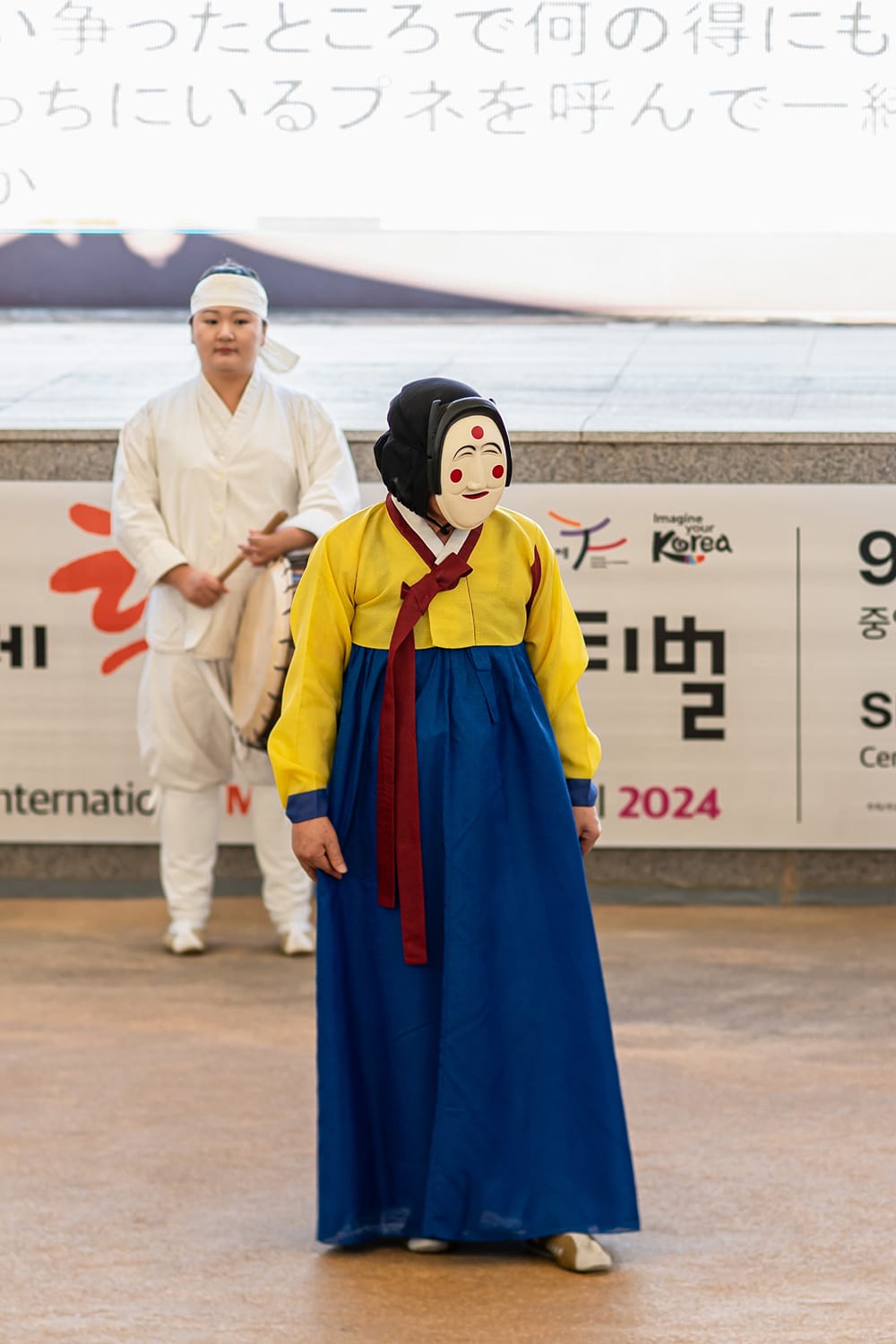
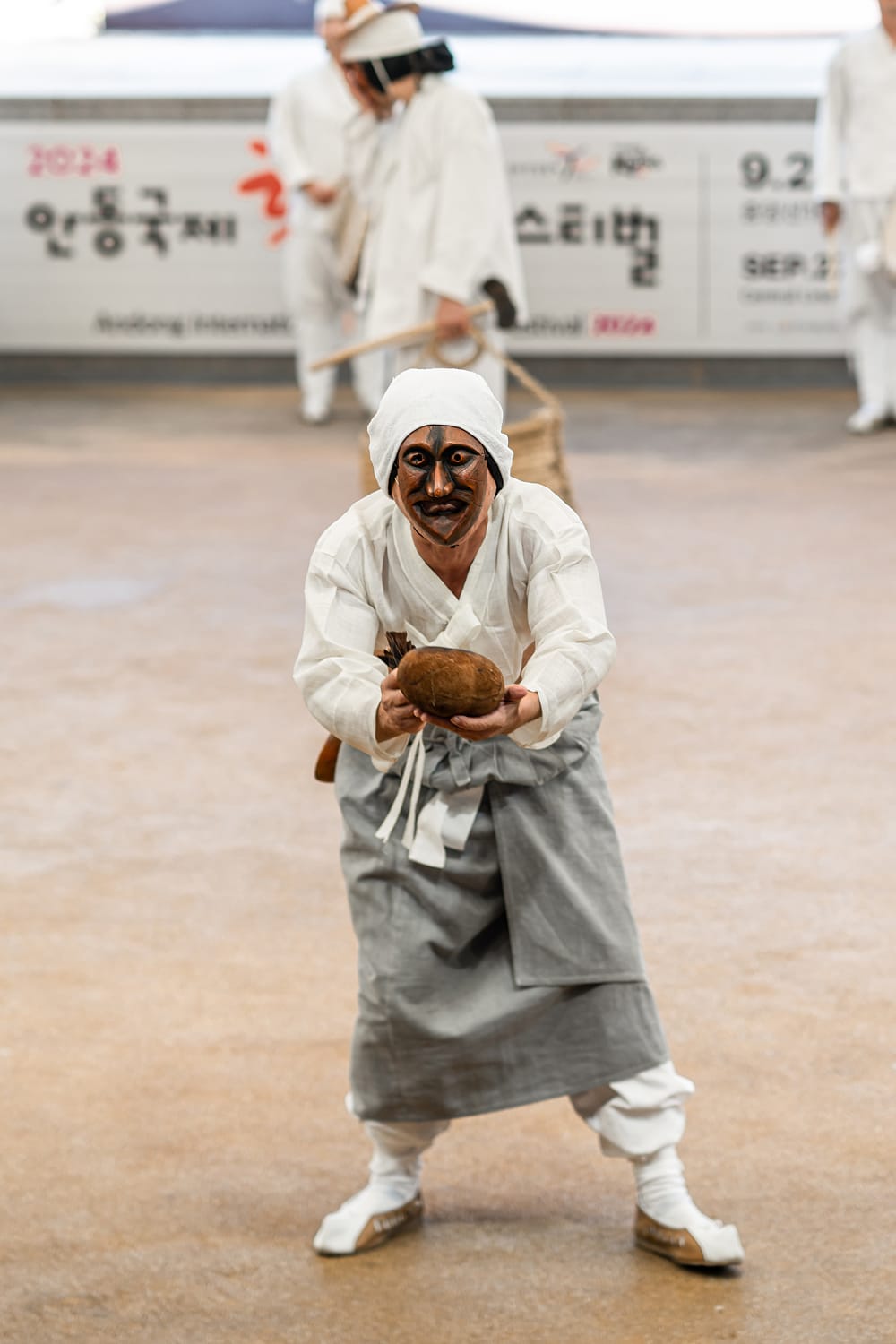
Hahoe Byeolsingut Mask Dance

A mask dance kept alive by this village for 600 years.
It began as the Byeolsingut, a rite offered to the village’s guardian deity.
In 2022, Korean mask dance (Talchum) was inscribed by UNESCO as Intangible Cultural Heritage of Humanity.

※ Days: Sat & Sun in Jan–Feb / Tue–Sun in Mar–Dec
※ Time: 14:00 – 15:00 · Free
※ Venue: the dedicated theatre opposite the Hahoe Village Tourist Information Centre
※ Subject to change depending on local conditions.

Official Hahoe performance info
樂 · To Enjoy 02

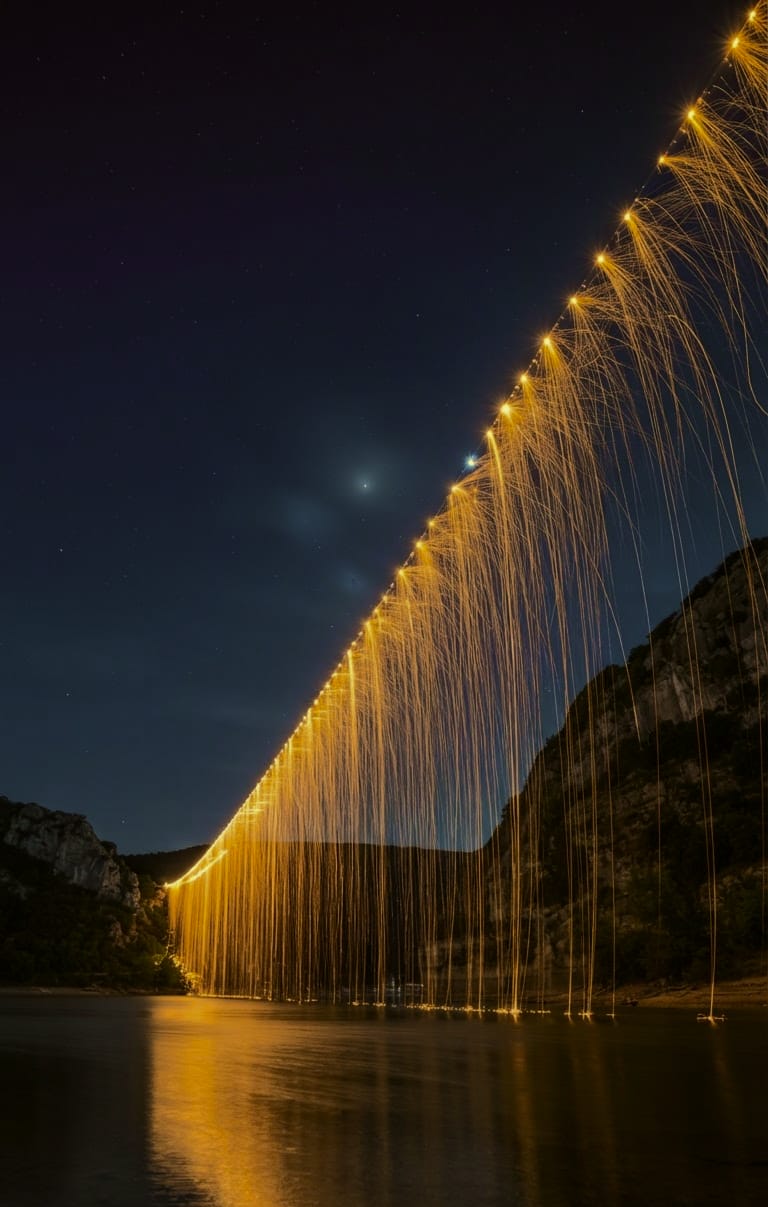
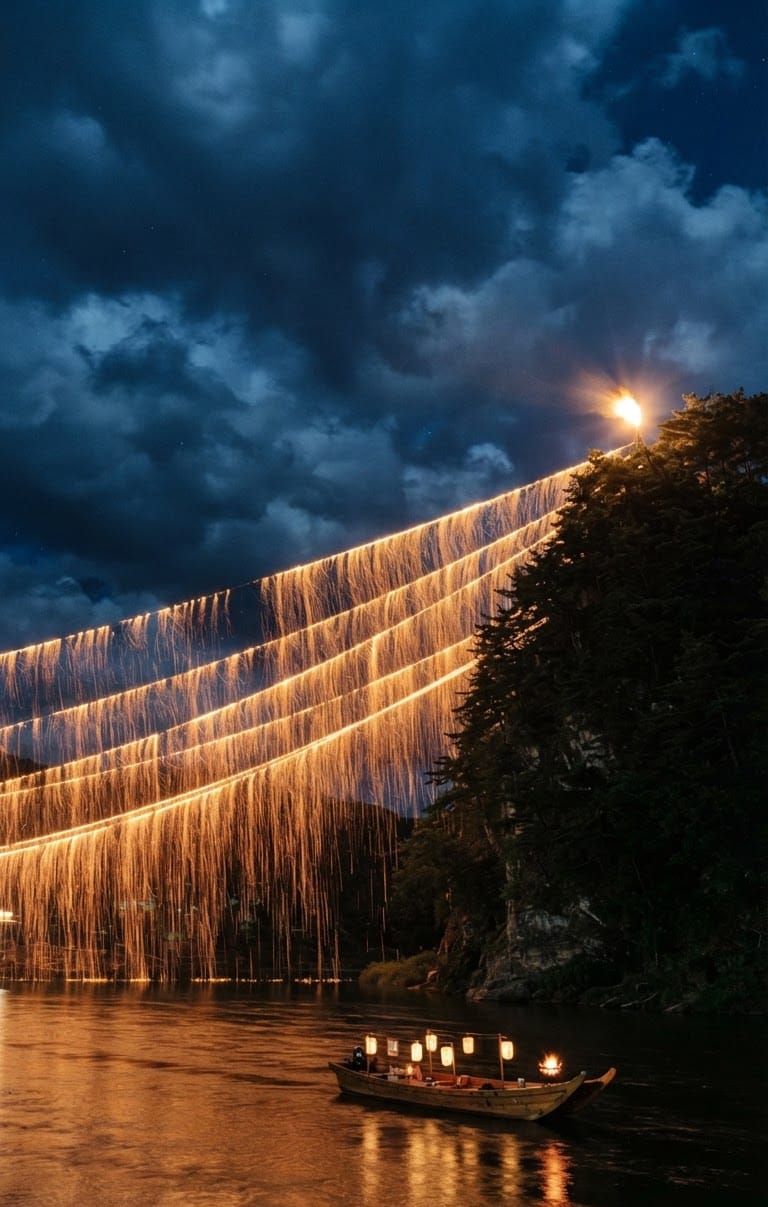
Seonyu Julbulnori Fire Festival

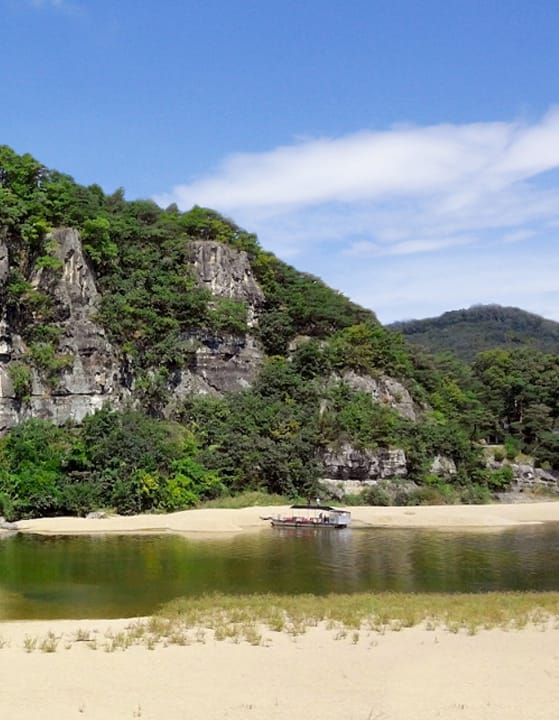
Ropes strung from Buyongdae Cliff across the river to Mansongjeong are hung with fire,
and sparks fall over the water like rain.
A sight seen only on a Hahoe night.

※ Held only on set dates each year.
※ Advance booking required.

樂 · To Enjoy 03

Ferry to Buyongdae,
and a stroll in hanbok

Cross the river by ferry and climb the 64m cliff of Buyongdae,
and the whole river-bend village lies before you.

Back at the hotel, slip into hanbok
and wander slowly through courtyards fit for a palace.

食 · To Taste

Suunjapbang Heritage Dining

Opening a 500-year-old cookbook

Suunjapbang is a cookbook left by a 16th-century Andong scholar.
The head lady of the Seorwoldang head family brings its guest dishes to today’s table.
This cuisine was also served at the Korea–Japan summit dinner.

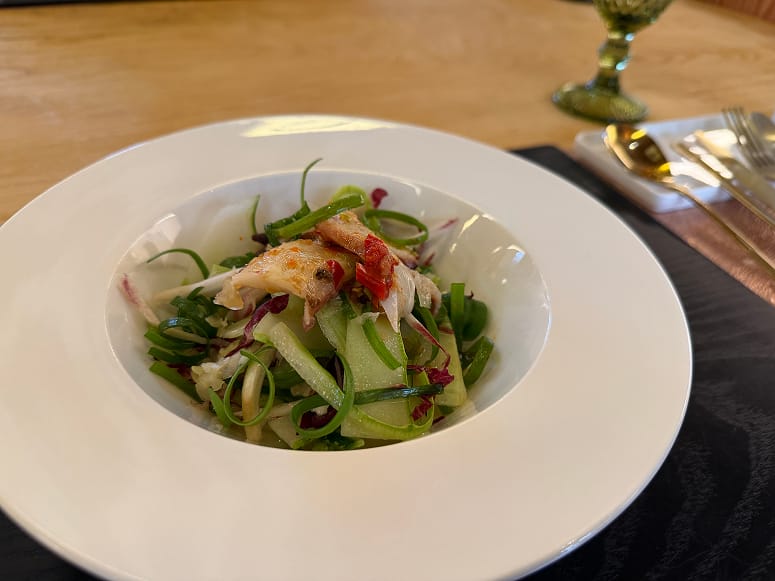
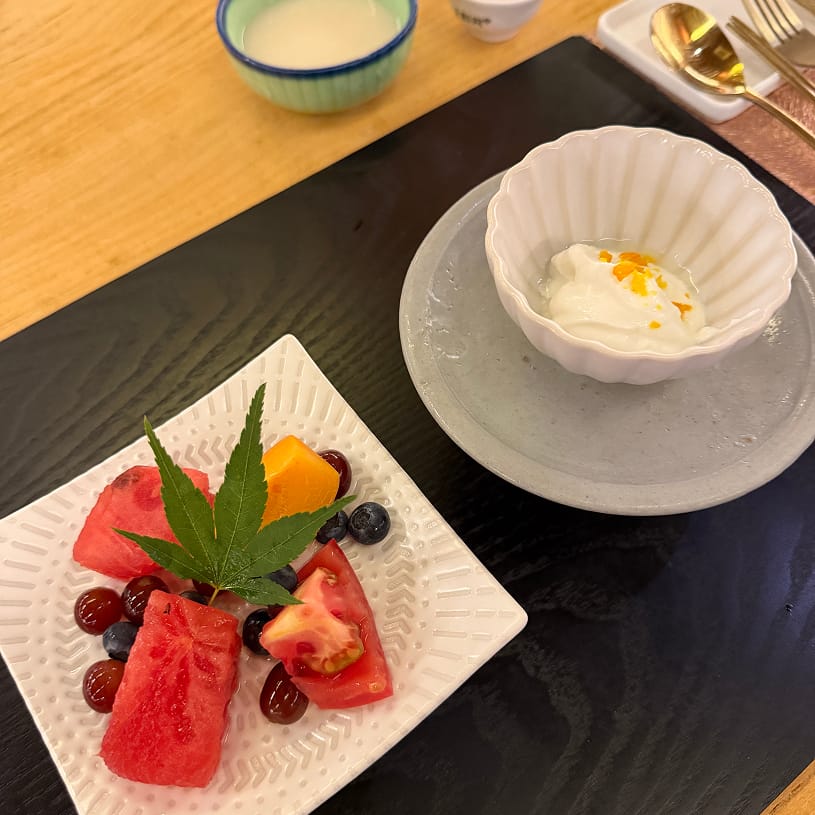
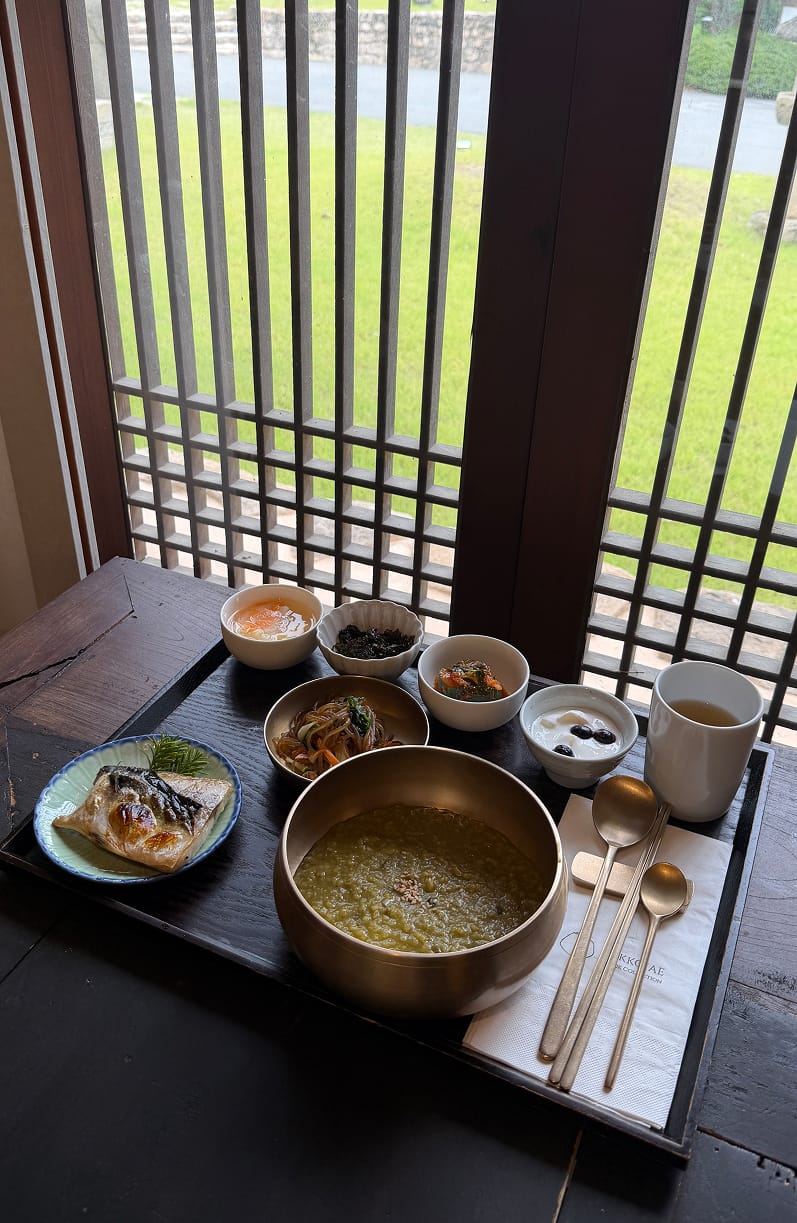
Breakfast

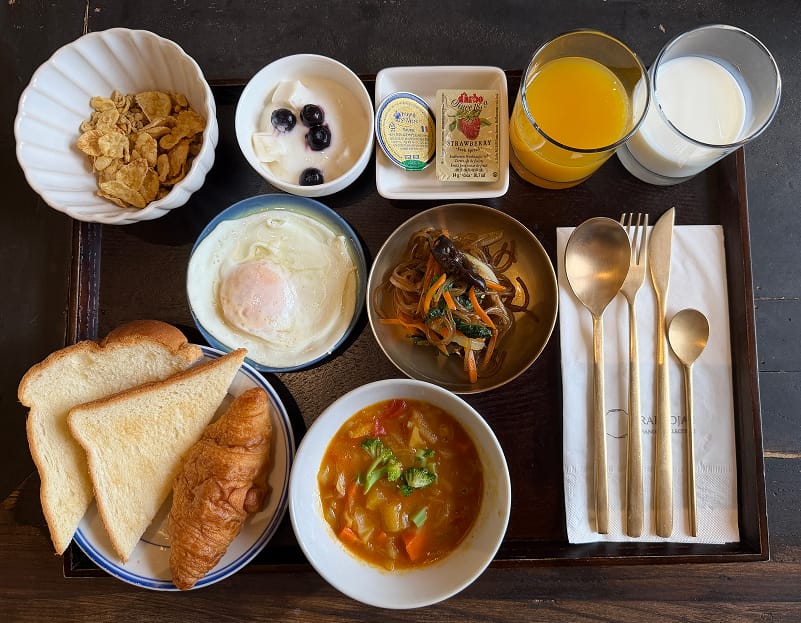
A choice of Korean, abalone porridge or Continental breakfast.

Address

Giwa Main House
186-20 Jeonseo-ro, Pungcheon-myeon, Andong-si, Gyeongsangbuk-do
Directions & details

How would you like to book?

Sign in to book at member rates.
You can also book as a guest.